• Biblical Families is not a dating website. It is a forum to discuss issues relating to marriage and the Bible, and to offer guidance and support, not to find a wife. Click here for more information.

Trouble Confidently Explaining How Polygyny is Still Biblical in NT

"Many will come from the East and West and sit down with Abraham Issac and Jacob in the kingdom leaves you realizing the "penalty" .....at least here at our house.....is just more family and blessings including cute little people.

Apologies for not replying right away to the rest of the many comments we've gotten.
We've read through all of them, and there has been a lot of food for thought that we've been discussing just haven't been able to actually sit down and write back with some of them. Thank you to everyone that has contributed with many ideas to ponder!

It is amazing how discovering that polygyny is Biblical leads you to actually go "backwards" to undo the knot and unravel all the deception, why society has gotten to this point, etc. More and more we come to the understanding that yes it's very important for men to know their actual options, as well as women, but the ramifications of knowing, or not knowing, that truth, are even more remarkable!


Prayers are very much welcome and appreciated!

Even if it "used to" be "okay" and now it's not . . . would clarification not have been made very clearly so that no one could use any NT passage, such as Matthew 8:11, parable, or allusion to the OT to say: Biblical marriage does include Plural Marriage as part of it?
It's just one more, of many pieces of the puzzle, that lead to the conclusion that no such commandment, clarification, etc. was made because it didn't change!

It is sad that the immediate thoughts related to Plural Marriage are all the bad things that are associated with it and not how beautiful it could be, if and when done Biblically!

Thanks for including the images! :)
 
I think the challenge any christian might ask is how you define one law in the Torah as moral and another as "immoral"? "AMoral"? Whatever the opposite of moral is in your mind. In order to know if the OT biblical definition of marriage is moral or not, there needs to be a concrete way to define what laws of God are moral to you. Personally, I would love to understand how that would be defined as well.

This is a good point as well. I am saying this a lot, but we're continuing to study to hone in on important details such as these.
 
Even if it "used to" be "okay" and now it's not . . . would clarification not have been made very clearly so that no one could use any NT passage, such as Matthew 8:11, parable, or allusion to the OT to say: Biblical marriage does include Plural Marriage as part of it?
It's just one more, of many pieces of the puzzle, that lead to the conclusion that no such commandment, clarification, etc. was made because it didn't change!

There's a pretty simple answer to this.

When we first start realizing the truth, we generally conisder the patriarchs and some of the kings. It seems like a rare, distant occurance.

After studying more, we can clearly see that the vast majority of the Israelite people observed plural marriage all the way through. We can see it in the Biblical censuses, clear as day. We have ancient historians telling us that it was common during the Second Temple period. We have history to tell us that it was normal in Israelite assemblies up until 1000 ad, when it was outlawed by Rabbinical decree because it was leading to the persecution if the Jews. History also tells us that gentile Christian groups continued to observe plural marriage even until and after coming to America. The Catholic church was still trying to stop Catholics from practicing it in the 1700s.

The "monogamy-only" doctrine comes from pagan people, it is a prostitution system. In monogamy-only, men tend to have one legal wife, a mistress, and prostitutes. Everything is deception and under the table. Men quietly pat each other on the back and wives look the other way.

So during the time of Yeshua's ministry and that of the Apostles after Him, plural marriage was still the norm. It wasn't until well after His time in a flesh body that marriage started to change. We don't see Him out preaching against marriage in general. We don't see Paul chastising the Galatians, who were polygynous people culturally.

The terms "monogamous marriage" and "polygynous marriage" are a problem to me. It sounds like two different things. We should just say "marriage" or "marriages" because in reality monogamous marriages almost don't exist at all. My first wife is monogamous because I'm the only sexual partner she's ever had. But the vast majority of people have had multiple partners, so they aren't monogamous at all.

Also, the idea of "serial monogamy" isn't actually monogamy either.
 
You want to really throw your parents for a loop, explain to them how if a couple divorces, the children and house are property of the father and the mother leaves the home and goes out with only basic provisions. :oops:;)

Seriously though there is a book called "Man and Woman in Biblical Law" by Thomas Shipley and you should buy a copy for your father. I believe they print it to order off Amazon, or Shipley has a free downloadable PDF version for your phone if you can find it buried on his website. I've bought about 25 copies of the physical book and read it on my phone. It goes over every person and reference of note in the Bible with painstaking effort and is quite good.
 
Yes, Greek is specific. It has one word where you can only own one instance of some object and another word in case you can own multiple instances of some object.

Learning about the nuances of Greek and the words being used is very helpful through all this.

It was something I was attempting to explain to them, but one of the arguments in that case is, the Bible is meant to be understood as is, to which my argument is, but isn't studying the original languages of the texts and the meaning of those words helpful to understanding the Bible as is since those languages are what was used to write them in the first place?
 
As @Joleneakamama said, the parable of the weddings feasts in Matthew and the parable of the wise and foolish virgins do come directly from the mouth of Christ, and both involve polygamy.

The Greek text does not say "wedding feast" in the singular. It is plural. It says "weddings feasts", or something of that sort.

In the other parable, the wise and foolish virgins were potential brides of one Man, not bridesmaids. Modern readers read their preconceived notions of monogamy into the text and change these women into bridesmaids, but they are actually brides.

When the five foolish ones show up later, they call Him Lord indicating that they belong to Him (wives belong to husbands, but bridesmaids do not). He in turn said "I don't know you" indicating that they do not belong to Him.

There will be no bridesmaids at the wedding feast of the Lamb. All of the Redeemed are participants, not onlookers.

Yup! The immediate reaction to this example was that they were bridesmaids/ symbolism. I did proceed to continue to attempt to explain anyway, but as I have heard and similar to what you said, when you have the monogamy only filters on, you view everything from that perspective.

The extreme polygamy of Solomon (which caused his fall), the imperfect son of David, points to the ultimate "polygamy" of the Greater Perfect Son of David, the Lord Jesus Christ.

While Solomon's 1000 wives turned his heart away from the Lord, the Greater Son of David will turn the hearts of all the billions of the Redeemed back to the Lord.

💯
 
Hi @All to Him

I too am a member of the church of Christ so I understand some of the specific challenges of speaking with those in our tradition.

The corner stone of the churches of Christ is trying to restore first century Christianity through the authority of the Bible alone. So establishing that polygyny was taking place in the first century is important. By law, Rome allowed a man to only be married to one woman at a time, but we know that Herod the Great, the Herod who tried to kill Jesus as a baby, had 10 wives. There seemed to be some leeway for polygyny in Judaea. So first century christians likely would have been familiar with polygyny in their time period. Non-christian jews didn't reject polygyny until the 11th century.

The church of Christ tends to be Antinomian (Against the Law). So one of the first things you need to do is establish how the Old Law relates to the New. I was taught that if something from the OId Law was not repeated in the New Law, it no longer applied (Example: Keeping the Sabbath day). I don't believe that anymore, but I can work with it. @Bartato had some great points, but a lot of his examples of things from the Old Law that are still sin are repeated in the New Testament, and so they hold no persuasive power in this conversation. Ask your family member to show that incest is wrong using the New Testament only. It can't be done. The New Testament has very few specifics as to what "sexual immorality" entails. You have to go to the Old Law to get the specifics of what is included in sexual immorality. So either they have to conclude that incest is not sexually immoral or admit that the Old Law defines sexual immorality for us under the New Law. Under the Old Law, polygyny was not sexual immorality or adultery, so without a new command in the NT, it is not sexual immorality under the New Law.

The second argument is what @Bartato covered regarding Romans 7:1-5, 1st Corinthians 7:10-1, and 1st Corinthians. 7:39. Churches of Christ tend to be complimentarian in their understanding of gender roles, but when it comes to Marriage, Divorce, and Remarriage theology, they quickly become egalitarian and apply all commands equally to each gender regardless of the text. If you hold them to "Speak where the Bible speaks. Silent where the Bible is silent." They have to acknowledge the conclusions about those passages that @Bartato laid out.

Speaking of Divorce passages, many will expand Jesus' teaching about divorce to include a teaching on polygyny. Again, "Speak where the Bible speaks. Silent where the Bible is silent." is an effective standard to hold them to at that point. This is also a good opportunity to explain that polygyny isn't one marriage between a man and many women. It is one man in multiple marriages to multiple women. So marriage is one man joined to one woman as Jesus describes. Polygyny is just one man in multiple marriages.
This was gold for us! We want to be able to speak the truth to them, but in a way that will actually click for them based on our belief system. Your breaking it down this way is something we hope will help to achieve that eventually. Thank you!
No disrespect to those who bring up the parables, but I don't think they are compelling arguments. Getting into the weeds about ancient jewish tradition and claiming translators are covering up the truth will not appeal to most people. I believe polygyny is permitted as much as the next person, but I'm not even fully convinced those passages should be translated the way some claim they should be. (Not looking to derail this thread with arguing about these passages)
As far as the parables, we see that the translations are at the very least misleading people, whether intentionally or not (though from what we’ve uncovered it was more likely intentional). That being said, at least for church of Christ members, I don’t think they are good compelling initial “arguments” as they are labeled symbolism at best.
For what it's worth, the BereanPatriot article is what convinced me initially. https://www.bereanpatriot.com/is-polygamy-polygyny-biblical-does-god-allow-it/
We have read through it once, but as we are realizing, we will probably be doing a lot of reading and rereading of many of the sources we have encountered.
 
In Hebrews 8:7 and 8:13 the word "covenant" was artificially and I would argue maliciously added to the text. This is a topic not many people understand, but if we look at the previous chapters of Hebrews we can obviously see that the topic is either "the priesthood" or "the High Priesthood."

If we read these passages in a KJV which has italics, it clearly shows us that these words did not appear in the original text. Often we will see one or two words added to streamline a sentence, such as "then" or "In the." This is just a translator bridging the gap to English from Greek.

Read Hebrews 8:8 - "For finding fault with them..."

"Them" who?

Artificially inserting "covenant" here changes the entire message of scripture. Whole new doctrines and whole religions were built on this one small "tweak." And yet, it is plain to see that this word was not here.

"For if that first priesthood had been faultless, then should no place have been sought for the second."

"In that he says, a new priesthood, he has made the first old. Now that which decays and becomes old is ready to pass away."

Also note that 8:13 - even if you adhere to the inserted "covenant" - clearly states that "it" still exists. The old becomes ready to pass away, but it hasn't. Paul says it still is here.

Since most of Hebrews 8 is reciting Jeremiah 31, we can look at that source. In Jeremiah 31 it speaks of a new covenant which will be made with Judah and Israel, which are called in scripture the two wives of Yahweh. (Stick around on this site very long and you will see references to Yahweh the Father being the husband of multiple wives).

Hebrew 9 also does this same thing but using "testament." Here though I would argue that the doctrinal argument stakes are a little lower.

"Then also the first priesthood had also ordinances of divine service, and a worldly sanctuary."

--------

This is a tangential topic but in Hebrews 10 we once again reference Jeremiah 31.

So let's look at Jeremiah 31 again.

----------

31Behold, the days come, saith Yahweh, that I will make a new covenant with the house of Israel, and with the house of Judah:

32 Not according to the covenant that I made with their fathers in the day that I took them by the hand to bring them out of the land of Egypt; which my covenant they brake, although I was an husband unto them, saith Yahweh:

33 But this shall be the covenant that I will make with the house of Israel; After those days, saith Yahweh, I will put my law in their inward parts, and write it in their hearts; and will be their God, and they shall be my people.

34 And they shall teach no more every man his neighbour, and every man his brother, saying, Know Yahweh: for they shall all know me, from the least of them unto the greatest of them, saith Yahweh: for I will forgive their iniquity, and I will remember their sin no more.

----------

"I will put my law in their inward parts, and write it in their hearts"

Has this happened? I don't believe so. We have many arguments so this can't have occurred yet.

"And they shall teach no more every man his neighbour"

We are still teaching each other. And arguing.

"for they shall all know me, from the least of them unto the greatest of them"

This certainly has not come to pass yet.
This was a big “wow” moment for us. And starts putting these verses into better context. Thank you for explaining this!
 
You want to really throw your parents for a loop, explain to them how if a couple divorces, the children and house are property of the father and the mother leaves the home and goes out with only basic provisions. :oops:;)

Seriously though there is a book called "Man and Woman in Biblical Law" by Thomas Shipley and you should buy a copy for your father. I believe they print it to order off Amazon, or Shipley has a free downloadable PDF version for your phone if you can find it buried on his website. I've bought about 25 copies of the physical book and read it on my phone. It goes over every person and reference of note in the Bible with painstaking effort and is quite good.

Regarding your reply right before this one, great mini history lesson! it’s interesting because the notion that many believers tend to have is that any polygyny that was occurring was *because of* the pagan influences, but it’s’ the opposite!

Also, it’s true what you said about monogamy and what we’ve been calling and continue to call monogamy is not actually what has been and is being lived out in general society.

We bought the Shipley book a few weeks back, it’s on our list to read soon!
 
I have found some want to use the words of Jesus quoting Genesis "For this cause shall a man leave his father and mother and cleave to his wife and they twain shall be one flesh" as a limiting thing (because wife is singular and twain is two) but Jesus was NOT asked "how many marriages can a man have?" So the answer from Jesus was addressing "putting away" wives.

To those who want to mis-use that verse.....I have a question. If the intent of that verse was to establish monogamy, AND forbid polygyny, why did Moses (same guy that wrote Genesis) later write verses REGULATING polygyny??

If he takes another wife her food clothing and duty of marriage he shall not diminish.

A man cannit marry a woman AND her daughter, or granddaughter.

Do not take a sister to your wife while she is living to vex her.

If a man has two wives .....he must honor the true firstborn even if his mother is not the favored wife.

Jesus also said if a man puts away a wife and marries another ......it causes adultery NOT if he keeps her and marries another. (See the first verse above)

So again, WHY would Moses write all this instruction if that verse in Genesis limited a man to one wife?
 
A common error used to argue against polygyny is that it "always causes problems, and nothing good ever came about through polygyny." Again, start with what is written; anchor your response to the Word of God, so that those anchored to the erroneous beliefs and ideas of men might be convicted by the truth.

Adam and Eve were monogamous. It was through this monogamous couple sin, suffering, and death came into the world and impacted ALL of humanity. They raised an angry son who became the first murderer. No other couple has brought so much suffering and disaster on so many.

Jacob was polygynous. It was through him and his four wives twelve sons were born who became the twelve tribes of Israel. Through the tribe of Judah came the Lord and Saviour Jesus Christ who gave His life to saves sinners, reconciling them to God. No greater blessing has come upon humanity than salvation by the grace of God through faith in Jesus Christ.

There are some good marriages and some bad marriages, and it doesn't make any difference how many marriages a man may simultaneously have. What makes the difference is the people's obedience, or lack there of, to Almighty God.
 
I also recommend Shipley's books. He is very helpful.

In addition, I recommend Martin Madan's classic treatise.
Thelyphthora or A Treatise on Female Ruin Volumes 1-3

This is a bit of a harder read since it is a bit dated. Madan was a Methodist pastor in England back in the 1700s, and was friends with people like John and Charles Wesley.

I think they actually have PDF copies of these books here somewhere on this website.
 
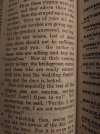
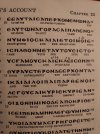
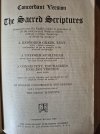
What bible are you using looks like a nice greek interlinear that id like to get my hands on?

I will get a Pic of the cover page when I get home. Here is the parable of the ten virgins showing how they changed the meaning.

Marriages (plural) turned into wedding (singular) festivities (plural).

Gotta tow the Roman Catholic party line!
1344.jpg1345.jpg
 
Yes, I’d like that parallel version too. Looking forward to the resource.
 
14627.jpg14628.jpg
 
I also recommend Shipley's books. He is very helpful.

In addition, I recommend Martin Madan's classic treatise.
Thelyphthora or A Treatise on Female Ruin Volumes 1-3

This is a bit of a harder read since it is a bit dated. Madan was a Methodist pastor in England back in the 1700s, and was friends with people like John and Charles Wesley.

I think they actually have PDF copies of these books here somewhere on this website.

I found the PDF links:

 
We are coming from the position that God fulfilled the "ceremonial" and "judicial" parts of the law, not the unchanging moral law.
why would you be having any problem then? is the permission of polygamy a ceremonial or judicial concern?
 
Back
Top